
The 5-Minute Rule: Why Fast Instagram Replies Can Change Your Sales
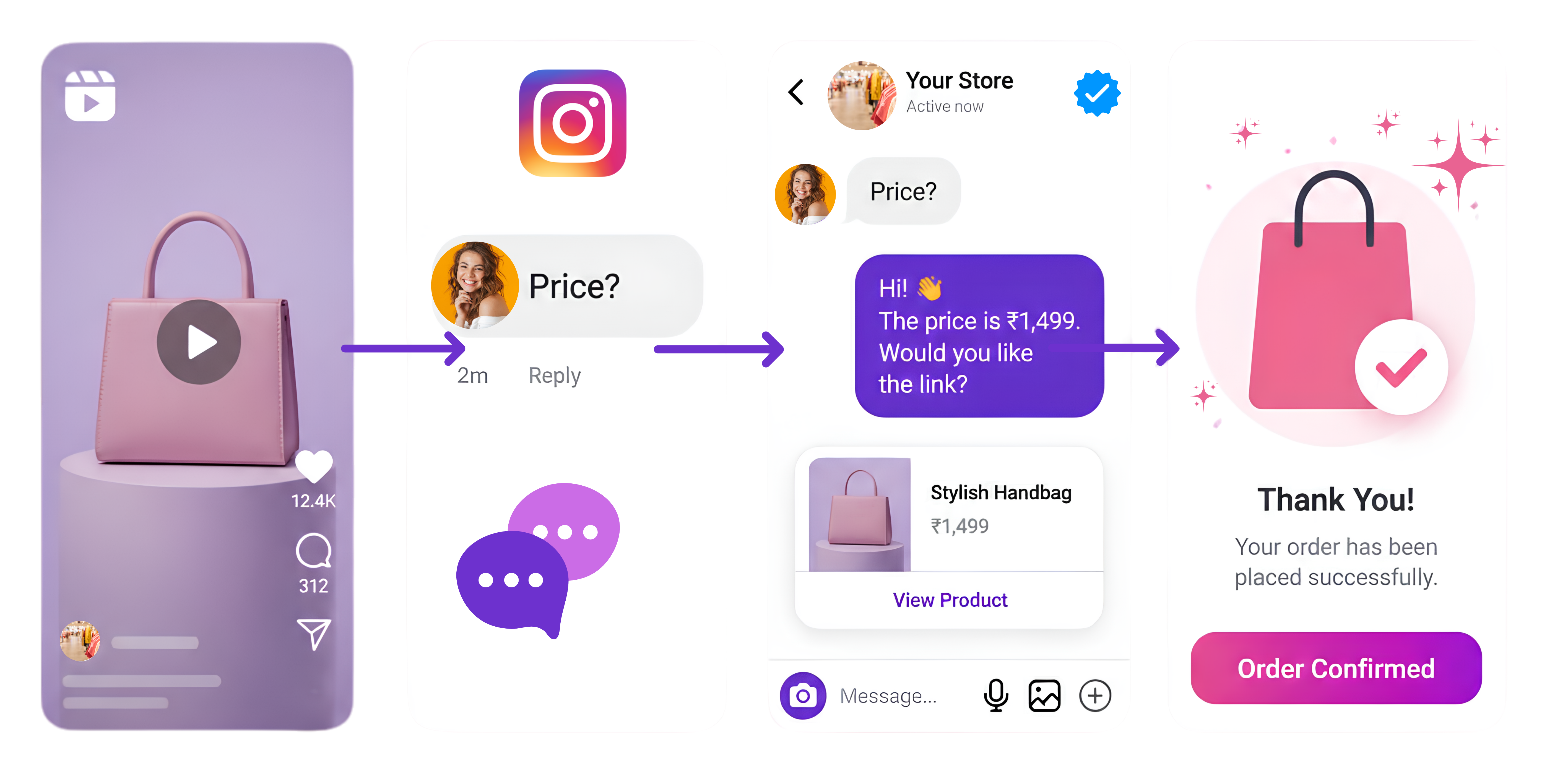
A customer sees your Reel. They like the product. They comment: “Price?”
That might look like a simple question. But it's actually a buying signal. The customer has moved beyond simply watching your content. They're interested enough to start a conversation.
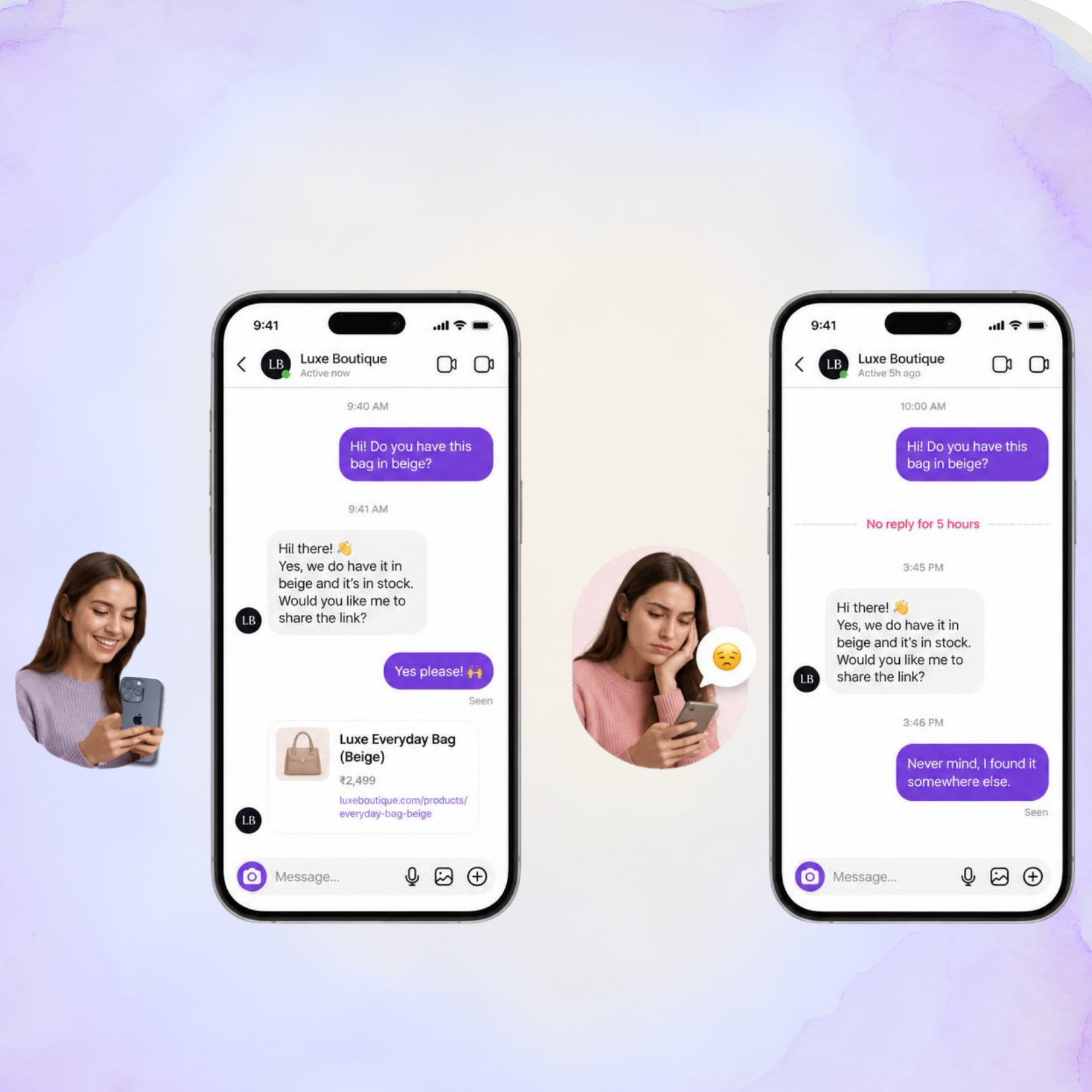
Now imagine two brands receive the same comment. Brand A replies within minutes. Brand B replies several hours later. The product hasn't changed. The customer hasn't changed. But the opportunity may have.
On Instagram, where people scroll quickly and can discover hundreds of competing products in minutes, delayed responses can create unnecessary friction. That's why response speed matters.
And while five minutes isn't a magical deadline that guarantees a sale, it represents an important principle: when a customer shows intent, respond while that intent is still fresh.
Why Does Response Time Matter on Instagram?
Instagram is built around immediacy. A Reel can go viral within hours. A customer can discover a product, ask a question, compare it with another brand, and make a decision within the same session.
When someone comments “Is this available?”, they may be comparing products, checking whether they're ready to buy, looking for the product link, checking the price, or deciding between your brand and a competitor.
The longer they wait for an answer, the more opportunities there are for that momentum to disappear. A quick response doesn't guarantee conversion. But it keeps the conversation moving. And that's what matters.
- Comparing products
- Checking whether they're ready to buy
- Looking for the product link
- Checking the price
- Deciding between your brand and a competitor
A “Price?” Comment Is More Valuable Than It Looks
Consider this interaction: Customer: “Price?” Brand: “It's ₹1,999. Here's the product link 👇” Customer: “Do you have COD?” Brand: “Yes, COD is available in eligible locations.”
The customer is still engaged. They're asking follow-up questions and moving closer to a decision.
Now imagine the same customer receives a response six hours later. By then, they may have forgotten about the product, found another option, decided not to buy, lost interest, or simply moved on.
You can't say that every delayed response equals a lost sale. But you can say that slow responses create friction at exactly the point when a customer is trying to move forward.
- Forgotten about the product
- Found another option
- Decided not to buy
- Lost interest
- Simply moved on
Fast Replies Reduce Buying Friction
Think about how many small questions can stop a customer from purchasing: “What's the price?”, “Is my size available?”, “Do you ship to my city?”, “How do I order?”, and “Is COD available?”
Each unanswered question creates another step between interest and purchase. A fast, relevant response removes that step.
Instead of Question → Wait → Maybe return, you create Question → Answer → Next step. That makes the buying journey easier. And sometimes, making it easier is all a customer needs to continue.
- What's the price?
- Is my size available?
- Do you ship to my city?
- How do I order?
- Is COD available?
But Fast Doesn't Mean Better
Here's the important part: speed alone isn't enough. A response can arrive instantly and still be completely unhelpful.
Customer: “Do you have this in XL?” Bad automated response: “Thanks for your interest! Our team will get back to you shortly.” The customer still doesn't have an answer.
A better response: “Yes! XL is currently available. You can order it here 👇”
The difference is simple: fast + relevant + useful = better customer experience.
Your goal shouldn't be to send the fastest possible message. It should be to give the customer the right answer without unnecessary waiting.
What Should Businesses Automate First?
You don't need to automate every conversation. Start with questions that are frequent, simple, and high intent.
These questions often have predictable answers. Instead of having a team member repeatedly type the same response, automation can handle the first interaction immediately.
Your team can then focus on conversations that actually require human attention.
- “Price?”: Send pricing
- “Link?”: Send product link
- “Available?”: Share availability
- “Size?”: Send size guide
- “How to order?”: Share ordering steps
- “Demo?”: Send demo information
Use Keywords to Catch Buying Intent
Customers don't always use the same words. One person might write “How much?”, another “What's the price?”, someone else “Cost?”, and another “Price please?” The wording changes. The intent doesn't.
Keyword targeting can help businesses identify common purchase-related terms and trigger the appropriate response.
For example: PRICE / COST / HOW MUCH → Pricing workflow → Instant DM → Customer gets the information.
This is especially useful for businesses receiving hundreds of comments across multiple posts.
Faster Replies Can Improve More Than Sales
Response speed isn't only about getting someone to buy. It can also affect how customers perceive your brand.
A business that responds quickly can feel more accessible, reliable, organized, and customer-focused.
Compare these two experiences. Experience A: “We'll get back to you soon.” Experience B: “Yes, it's available! Here's the link 👇”
The second response gives the customer certainty. And certainty helps remove hesitation.
- More accessible
- More reliable
- More organized
- More customer-focused
Measure Whether Faster Replies Actually Work
Don't assume faster responses automatically mean more revenue. Measure the impact.
This changes the question from “Are we replying faster?” to “Are faster replies creating better customer outcomes?” That's the metric that matters.
- Response Time: How quickly does the customer receive the first response?
- Response Rate: How many customers continue the conversation?
- Link Clicks: How many people click the product or landing-page link?
- Leads Captured: How many conversations turn into potential customers?
- Conversion Rate: How many of those leads eventually purchase?
- Revenue: How much revenue can be connected to those conversations?
How Flozari Helps Businesses Respond Faster
Flozari helps businesses automate Instagram conversations so customers don't have to wait for a team member to handle every repetitive request.
Together, these features help businesses move from “We'll respond when someone is available” to “The customer gets the information when they ask for it.”
- Comment Auto-Reply: Automatically respond to relevant comments
- Keyword Targeting: Trigger specific workflows based on customer keywords
- DM Automation: Send relevant information based on customer interactions
- AI-Powered Replies: Generate more natural, context-aware responses
- Team Inbox: Bring your team into conversations that need a human touch
- Activity Analytics: Track how your Instagram automations are performing
The 5-Minute Rule Isn't Really About Five Minutes
Here's the bigger lesson. The exact number isn't the point. Responsiveness is.
If someone asks for a product link, don't make them wait unnecessarily. If they ask about pricing, give them the information. If they need help choosing, guide them. If they have a complex problem, connect them with someone who can help.
The goal isn't to reply quickly just to improve a response-time metric. The goal is to remove unnecessary waiting from the customer journey.
Final Takeaway
A customer who comments “Price?” isn't promising that they'll buy. But they are giving you an opportunity. And that opportunity can become harder to capture as time passes.
Fast replies don't guarantee sales. But slow replies can create unnecessary friction.
The smartest approach is to automate repetitive questions, respond to high-intent customers quickly, use AI where it adds value, bring humans into complex conversations, and measure whether faster responses actually improve conversions.
Because sometimes the difference between “I'm interested” and “I bought it” isn't another ad. It's simply whether your brand responded while the customer was still ready to talk.
- Automate repetitive questions
- Respond to high-intent customers quickly
- Use AI where it adds value
- Bring humans into complex conversations
- Measure whether faster responses actually improve conversions
Respond while intent is fresh.
Turn high-intent Instagram questions into faster, more helpful customer conversations.
Reply faster with FlozariContinue reading
More Instagram automation guides
6 min read
The Death of the ‘Link in Bio’ as the Only Instagram Conversion Strategy
Read article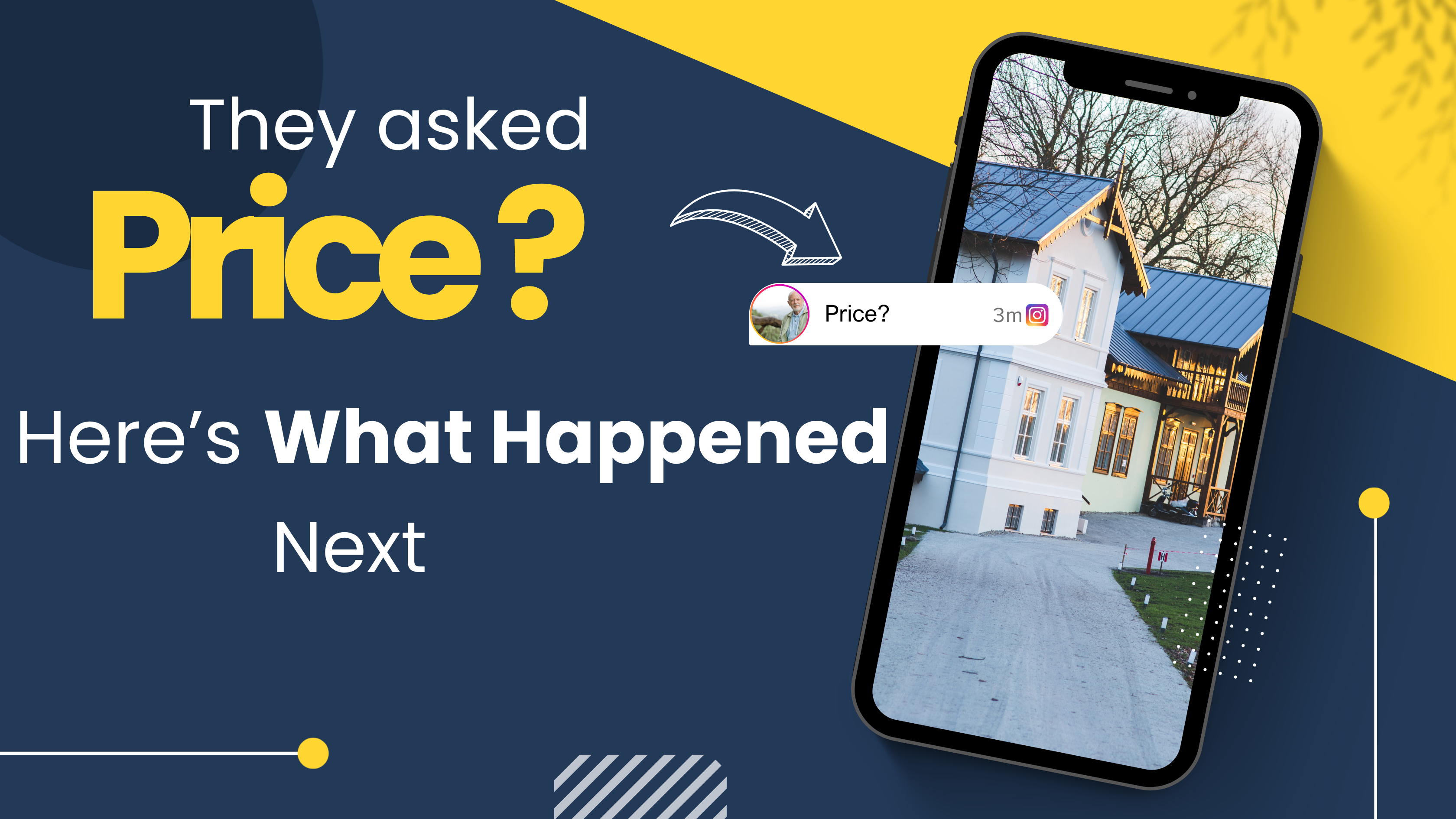
6 min read
We Followed a Customer From “Price?” to Purchase
Read article
5–6 min read